Calorie Awareness
Calorie Awareness and the Evidence for Energy Balance in Long-Term Weight Maintenance
Eleanor Whitfield
•

The distinction between whole food choices and their processed counterparts has moved from a peripheral consideration to a central question in long-term weight research over the past fifteen years. Prospective studies following large population cohorts across multi-year periods have begun to provide data of a scale and duration that shorter intervention studies cannot. What those studies observe, consistently, is that dietary pattern — the overall composition of what people eat over time — matters as much as any individual food component.
The term whole food, as it appears in nutritional literature, does not carry a universal definition. Studies use it variously to describe foods consumed in their minimally processed state, foods that retain their natural fibre and nutrient matrix, or foods that have not been subjected to industrial formulation processes. The absence of a standardised definition creates some difficulty in comparing findings across studies, and this publication notes that caveat explicitly.
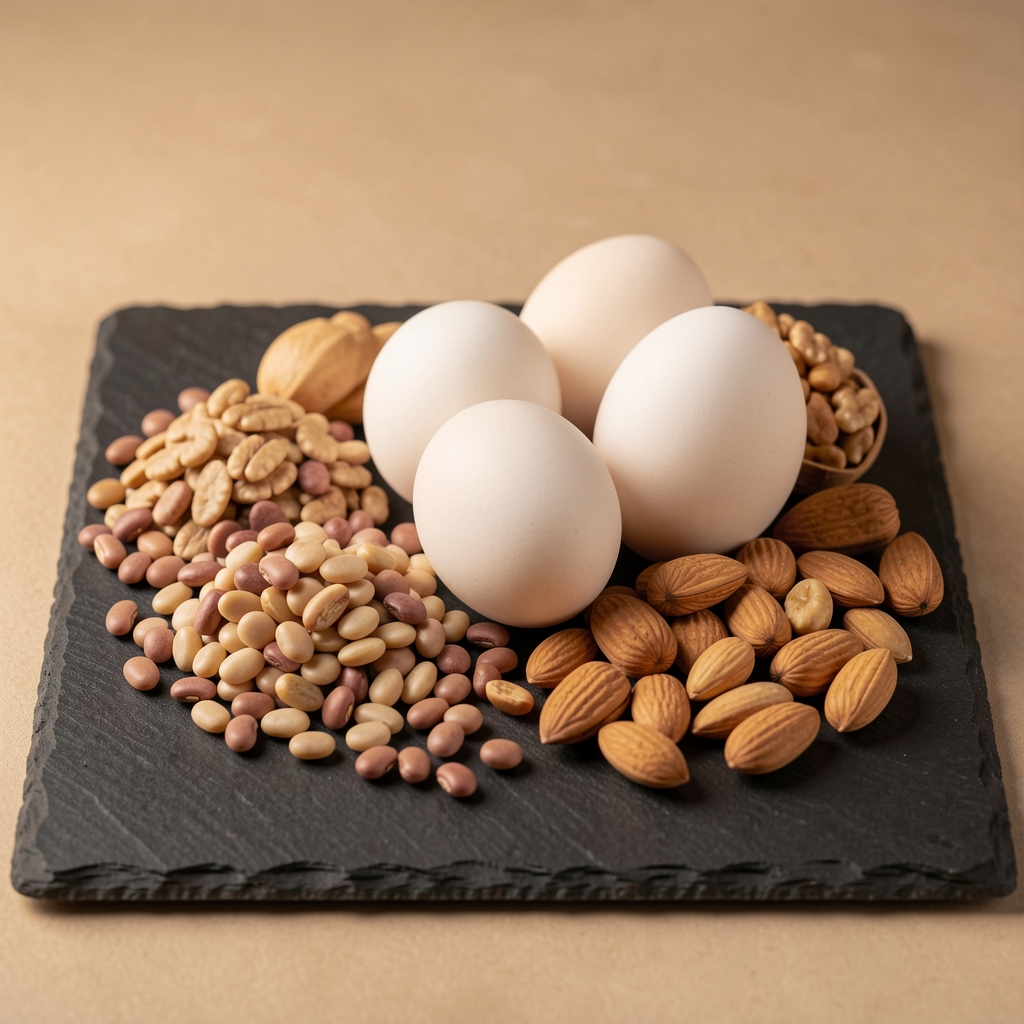
For the purposes of this article, whole food choices are understood to include vegetables, fruits, whole grains, legumes, nuts, seeds, and minimally processed animal products. The contrast is with what processed food awareness researchers describe as ultra-processed foods — products formulated with additives, flavour enhancers, emulsifiers, and colourings, which typically have low fibre content and high energy density relative to their volume.
The NOVA food classification system, developed by Brazilian researchers and now widely used in nutritional epidemiology, provides a four-group framework for classifying foods by degree of processing. It has been applied in a substantial number of large-scale cohort studies and provides a useful anchor for the body of evidence this article draws on.
"Dietary pattern — the overall composition of what people eat over time — matters as much as any individual food component. The research increasingly supports this observation across independent study populations."
Large prospective cohort studies — including the European Prospective Investigation into Cancer and Nutrition (EPIC), the UK Biobank, and the Nurses' Health Study and Health Professionals Follow-Up Study in the United States — provide data on dietary pattern and body composition across periods of 10-25 years. The relevant findings, taken together, show several consistent associations.
First, higher consumption of whole grains is consistently associated with lower long-term weight gain, even after adjustment for total energy intake. The whole grain benefits proposed mechanism involves both fibre content — with the satiety and digestive effects described in the previous article in this series — and the more gradual glucose release associated with intact grain structures, which appears to support more stable appetite regulation.
Second, higher consumption of ultra-processed foods is associated with greater long-term weight gain across multiple independent cohorts. A 2019 study published in the BMJ, which followed over 100,000 French adults, found that a 10 percentage point increase in the proportion of ultra-processed foods in the diet was associated with a 0.5 kilogram per square metre higher body mass index at follow-up, independent of total calorie intake and other confounders.
Third, plant-based eating patterns — broadly characterised by a higher proportion of vegetables, fruits, legumes, and whole grains relative to animal products — are consistently associated with lower body weight and better body composition outcomes in prospective data. The proposed mechanisms are multiple and interacting: higher fibre intake, lower energy density per unit volume, and differences in the metabolic processing of plant-based versus animal-based fats.

Processed food awareness, as a framing, directs attention not only toward what individual ultra-processed products contain but toward the cumulative effect of consuming a diet in which they constitute a large proportion of total intake. The mechanisms proposed to explain the association with weight gain go beyond energy density and fibre removal, though both are relevant.
Research on the eating rate associated with ultra-processed versus whole foods suggests that ultra-processed foods are consumed more rapidly, reducing the time available for satiety signals to develop during a meal. Studies using controlled conditions — in which participants were offered meals matched for energy, fibre, and macronutrient content but differing in processing level — have found higher spontaneous intake from the ultra-processed condition, suggesting that processing influences intake through mechanisms beyond the nutritional composition of the food itself.
These findings do not translate to a simple instruction to avoid processed foods entirely. The research population includes many individuals who consume varying quantities of processed food without gaining weight over time. The relevant dimension is the proportion of processed food in the overall eating pattern — which brings this discussion back to the concept of food quality over quantity as an orientation for long-term eating rather than a categorical restriction.
Fat intake and body composition is an area where the long-term cohort data partially contradicts the conclusions sometimes drawn from shorter intervention studies. While reduced-fat dietary interventions show modest short-term weight loss in controlled conditions, the prospective evidence on populations eating naturally-occurring fat from whole food sources — nuts, oily fish, olive oil, avocado — does not show the expected positive association between fat intake and weight gain.
The Mediterranean dietary pattern, which is high in fat from olive oil and nuts while also rich in vegetables, whole grains, and legumes, is associated in prospective data with lower rates of long-term weight gain compared with lower-fat Western dietary patterns. The proposed explanation — that the source and food matrix of fat intake matters more than the total quantity — is consistent with the broader pattern-based findings: whole food choices that happen to be high in fat behave differently, at the population level, from high-fat ultra-processed products.
This does not mean that total fat intake is irrelevant to energy balance — it is not. Fat's energy density of nine kilocalories per gram remains a relevant consideration. The point is that the food pattern context in which fat is consumed appears to modify its effect on long-term body composition in ways that the energy content alone does not capture.
The long-term eating rhythm literature adds a temporal dimension to the whole food pattern findings. Individuals who maintain relatively stable dietary patterns over time — eating broadly similar foods in broadly similar proportions across weeks and months — show better body composition outcomes in prospective data than those whose dietary patterns vary widely. The instability associated with alternating periods of whole food eating and high-processed-food eating may, in effect, prevent the body's appetite-signalling systems from calibrating around a consistent baseline.
Mindful portion habits appear more consistently in the eating profiles of individuals who maintain whole food dominant patterns over time than in those whose patterns are more variable. This association is observational and does not establish causality — it may reflect pre-existing dispositions toward structured behaviour rather than a direct effect of food composition on portion awareness. But it is a consistent finding across several independent data sets.
The practical implication, if the findings are taken together, is that a long-term eating rhythm built around whole food choices — without requiring perfection or the elimination of any food category — represents the most consistent pattern in the research on body composition maintenance. Not as a restriction, but as a stable and repeatable approach to eating that the body's own regulatory systems can orient around.
Articles published on Telmaro Notebook are editorial in nature and reflect the writers' observations on everyday wellness practices. The content is not intended as professional advice, nor as guidance for the management of any specific condition. Readers with specific concerns about their daily routines are encouraged to speak with a qualified wellness professional.

Harriet Pembroke is a guest contributor to Telmaro Notebook. Her writing focuses on the intersection of population-level nutritional research and everyday dietary patterns, with a background in nutritional epidemiology.
More articles from this edition